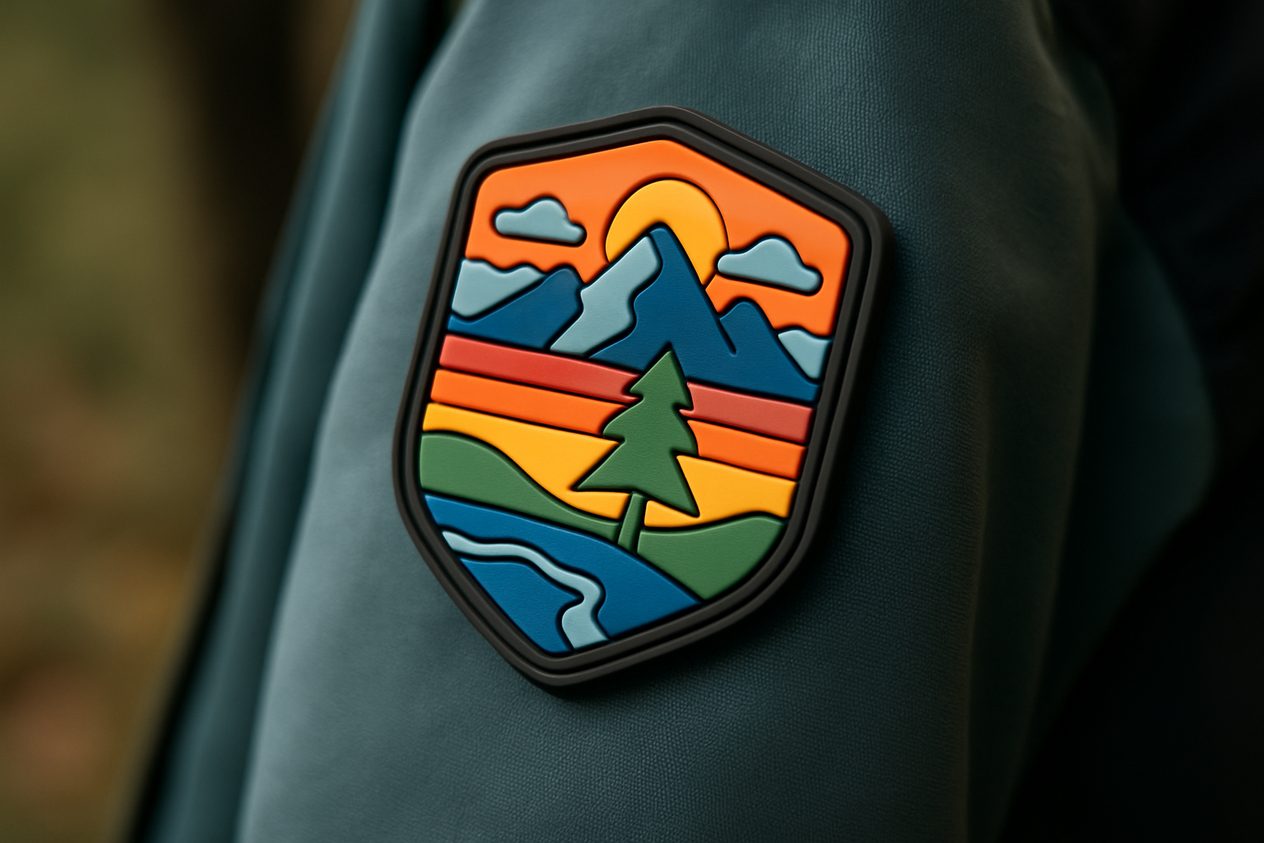
You ordered great patches — now how do you put them on? The right attachment method depends on the garment, how much wear it will see, and whether you want the patch to be removable. This guide compares sew-on, iron-on, and Velcro patches and how to apply each.
Sew-on patches
Sewing is the most secure and durable way to attach a patch — it survives heavy use and repeated washing. It is the best choice for work uniforms, denim, bags, and anything that gets abused.
- Position the patch and pin or use a dab of fabric glue to hold it in place.
- Stitch around the edge by hand or machine using thread that matches the patch border.
- For thick patches, a sewing awl or heavy-duty needle helps.
Iron-on (heat-seal) patches
Iron-on patches have a heat-activated adhesive on the back. They are quick and tool-light — ideal for cotton and poly-cotton items.
- Heat your iron to a high, dry setting (no steam).
- Place the patch, cover it with a thin cloth or parchment, and press firmly for 30–45 seconds.
- Let it cool, then test the edges. For items washed often, add a few stitches around the edge for extra hold.
- Do not iron-on to nylon, leather, or heat-sensitive fabrics — sew those instead.
Velcro (hook & loop) patches
Velcro backing makes patches removable and swappable — the standard for tactical gear, uniforms, and morale patches. The hook side attaches to the patch and the loop side is sewn to the garment, so you can change patches anytime.
Adhesive / peel-and-stick
Peel-and-stick backing is best for temporary or event use — trade shows, one-day events, or quick branding. It is not meant for washing or long-term wear.
Which should you choose?
| Method | Best for | Removable? | Washable? |
|---|---|---|---|
| Sew-on | Heavy use, uniforms, denim | No | Yes (excellent) |
| Iron-on | Cotton tees, quick application | No | Yes (reinforce edges) |
| Velcro | Tactical, swappable patches | Yes | Yes |
| Adhesive | Temporary / events | Yes | No |
Still choosing a patch type? Compare leather vs. rubber (PVC) patches and embroidered patches.
Frequently asked questions
Will an iron-on patch stay on after washing?
Iron-on adhesive holds well, but with frequent washing the edges can lift over time. For long-term durability, reinforce the edges with a few stitches.
Can you iron a patch onto a hat?
On a cotton cap, yes — but structured or curved caps are easier to sew. Many embroidered hat patches use a sew-on or heat-seal backing.
What backing is best for a jacket?
For a jacket that gets a lot of wear, sew-on is the most durable. Velcro is ideal if you want to swap patches.
Order patches with your preferred backing
We add the backing you need — sew-on, iron-on, Velcro, or adhesive — right at production. Request a free quote and tell us how you plan to use them.