Patches add a premium, tactile branding element to hats, jackets, bags, and jeans. The two most popular custom options are leather patches and rubber (soft PVC) patches — and they create very different looks. Here is how to choose between them.
Custom leather patches
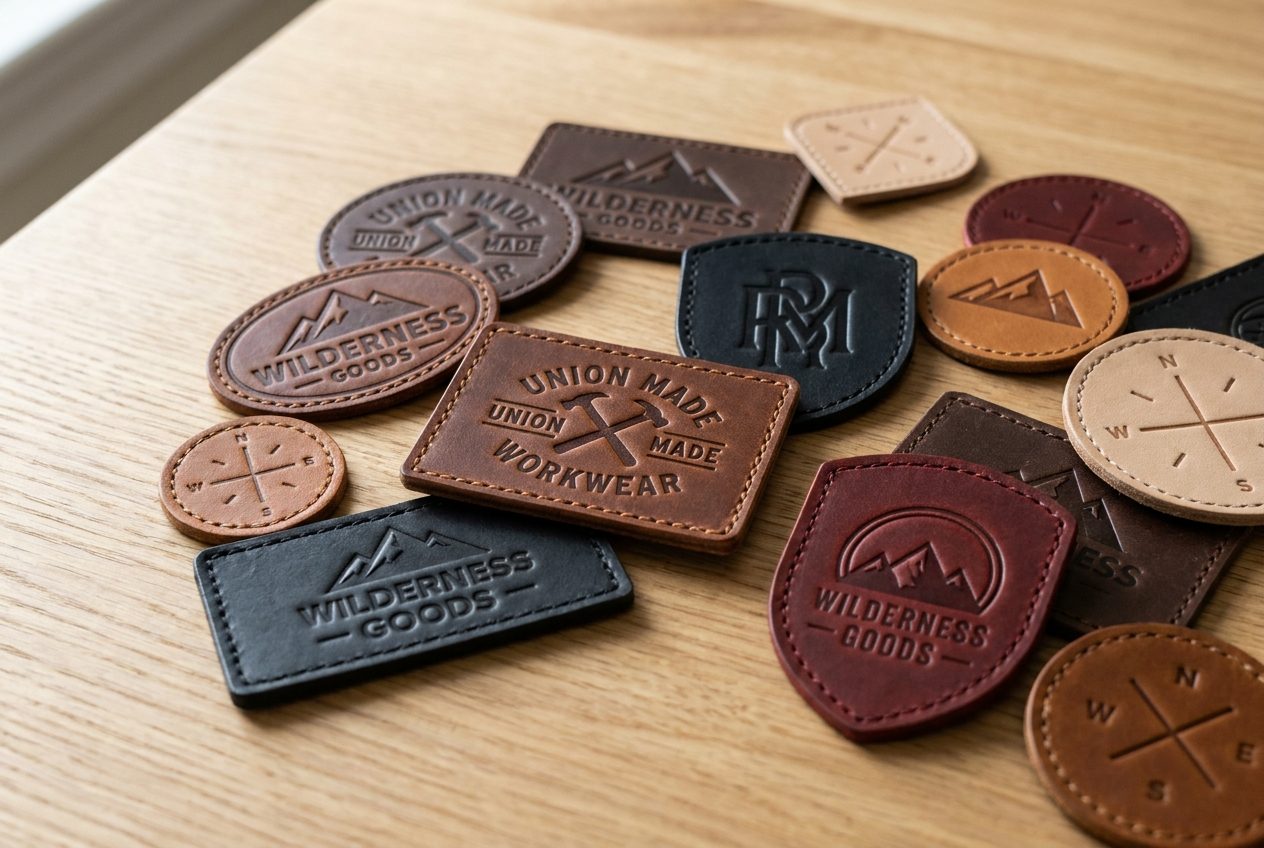
Leather (and vegan-leather) patches give a classic, heritage feel. The design is usually debossed (pressed in) or laser-engraved, which reads as understated and high-end. They are a favorite for hats, denim, and bags.
- Look: Natural, premium, rustic or refined depending on the leather.
- Detail: Best for logos and text; fine color detail is limited (it’s tonal/engraved).
- Best for: Hats, jackets, denim, bags, anything with a heritage or craft vibe. See our leather patch options.
Custom rubber (soft PVC) patches
Soft PVC patches are molded in 2D or 3D, with crisp raised edges and bright, durable colors. They are waterproof and rugged — ideal for outdoor gear, workwear, and bold logos.
- Look: Modern, vivid, dimensional (3D molding possible).
- Detail: Excellent for multi-color logos and gradients-in-relief; very durable.
- Best for: Outdoor/tactical gear, activewear, kids’ wear, bold branding. See our rubber patch options.
Leather vs. rubber patches: side-by-side
| Feature | Leather | Rubber (PVC) |
|---|---|---|
| Vibe | Heritage, premium | Modern, bold |
| Color | Tonal / debossed | Bright, multi-color |
| Durability | Very good | Excellent, waterproof |
| 3D effect | Debossed only | Full 3D molding |
| Best on | Hats, denim, bags | Outdoor gear, activewear |
How are patches attached?
Both can be applied with sew-on, iron-on (heat-seal), or hook-and-loop (Velcro) backings. Sew-on is the most durable; iron-on is fast; Velcro lets you swap patches. Tell us the garment and we’ll recommend the backing.
Which should you choose?
Choose leather for a premium, classic look on hats and denim; choose rubber/PVC for bold color, 3D depth, and rugged durability on outdoor and athletic gear. Want a stitched-in fabric option instead? Compare with woven and printed labels.
Frequently asked questions
Are leather patches more expensive than rubber patches?
Costs are usually comparable, and both are driven mainly by size, quantity, and backing choice rather than material alone. Genuine leather can run higher than vegan-leather or PVC, while soft PVC stays affordable even with multiple colors. For an exact figure on your design, request a free quote and we’ll price your size and quantity.
Which patch holds up better outdoors and in the wash?
Rubber (soft PVC) is the more rugged choice — it’s waterproof, fade-resistant, and shrugs off sun, sweat, and repeated washing, which makes it ideal for outdoor and athletic gear. Leather is durable too, but it can dry, crack, or spot if it’s soaked often. For heavy laundering, a sew-on rubber patch is the safest bet.
Can I get full-color detail on a leather patch?
Leather is tonal by nature — the design is debossed or laser-engraved, so it reads as understated and premium rather than brightly colored. If your logo depends on multiple colors or gradients, soft PVC molding renders them far better. Many brands use leather for a heritage look and rubber when the artwork needs vivid, multi-color impact.
What backing should I choose for my patch?
Both materials support sew-on, iron-on (heat-seal), and hook-and-loop (Velcro) backings. Sew-on is the most permanent and best for frequent washing; iron-on is fast for flat garments; Velcro lets you swap patches on and off. Not sure? Design your patch online and tell us the garment, and we’ll recommend the right backing.
Order custom patches
Design your patch online or request a free quote — we’ll help with size, backing, and the best material for your product.